

Most office moves out of London begin with a spreadsheet and end with a worry: the numbers work, but will the team actually come in? Kingston is one of the few places that answers both.
If you are weighing up moving your office out of London, this is what we have learned watching teams make the move into our building at 145 London Road, Kingston upon Thames. Who it suits, who it does not, how a sensible relocation actually works, and what to check before you commit. We run the building, so the advice here is practical rather than promotional, and where Kingston is the wrong answer we will say so.
Why teams are moving out of London, and choosing Kingston
For a long time the measure of a serious office was how close it sat to the centre of London. That has quietly changed. The more useful question now is how close you can get to where your people already live, and for a large slice of the south-west London and Surrey workforce, the answer is Kingston.
Three things are driving it. Hybrid working gave teams a taste of shorter commutes, and few want to hand that back in full. The cost of a daily journey into Zone 1, in money and in hours, is harder to justify when much of the work can happen anywhere. And retention has quietly become a property question: where you ask people to come in matters as much as whether you ask them at all. Moving your office out of London is, for many teams, a way to keep the office culture without the commute that erodes it, and Kingston is where a large slice of that workforce already lives.
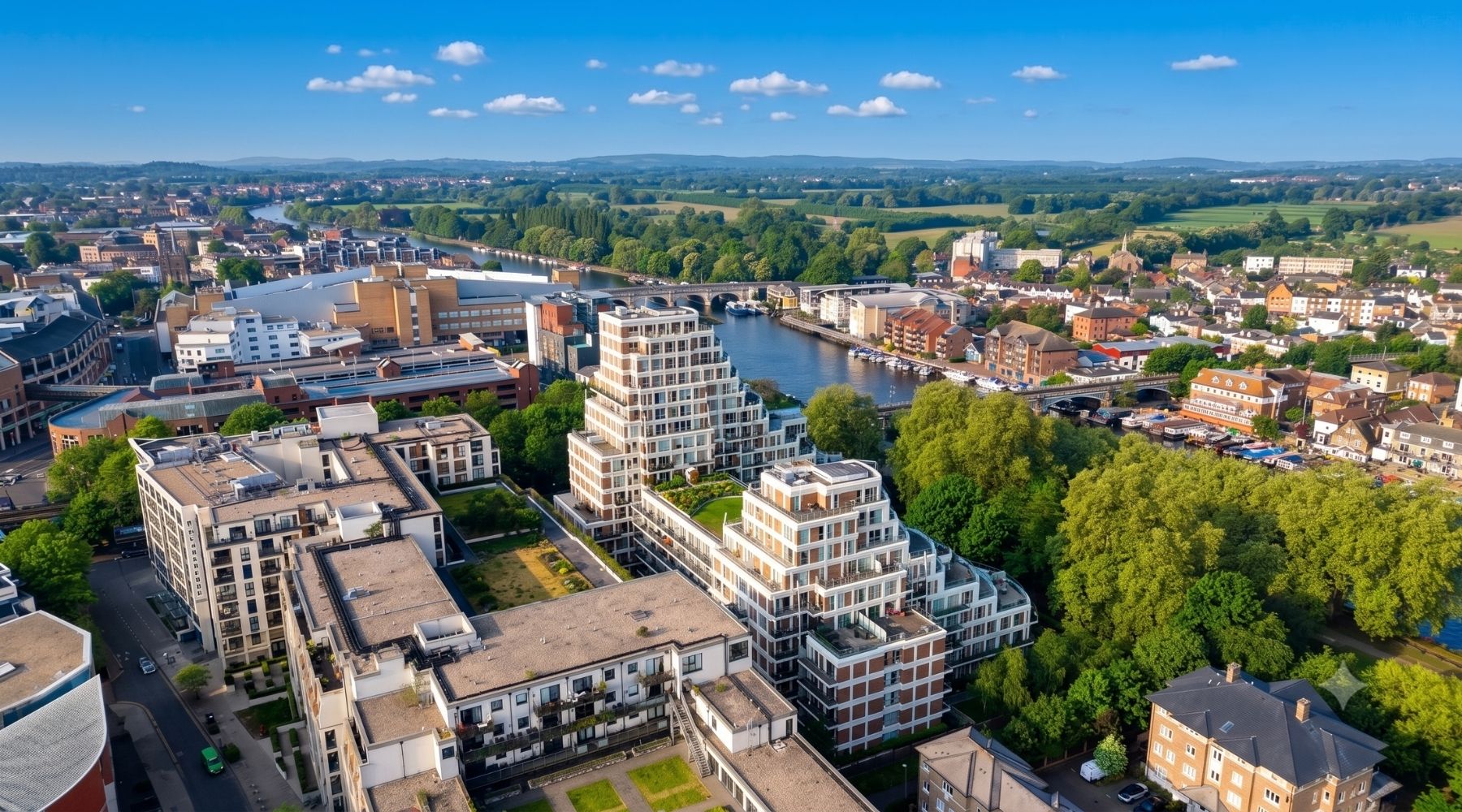
The town has the fundamentals to back it up. Two mainline stations put central London within about half an hour, so nobody is cut off from the city when they need it. Major employers have noticed: Unilever opened its UK and Ireland headquarters in the town in 2026, which tells you something about where the talent pool sits. You can read the wider business picture on the Royal Borough of Kingston site. Set against Richmond or Wimbledon, Kingston tends to offer comparable quality for better value, which is precisely why teams make the move.
Is Kingston the right move for your team?
Honesty converts better than a hard sell, so here is the uncomfortable half. Kingston is not right for everyone, and a relocation is expensive to get wrong.
It suits you if a good share of your team lives in the south-west London and Surrey belt, if you are four to twenty people, and if client visits are occasional rather than daily. For that profile, a Kingston base usually does more for morale and retention than a prestigious postcode half the team dreads travelling to.
It is the wrong move if most of your people live in east or north London and would simply swap one long commute for another, or if your business genuinely depends on being a few minutes from clients in the City or the West End. In that case, moving out of London to Kingston will feel like a compromise, and we would rather you knew that before a viewing than after a lease. Be honest about where your team actually lives before you fall for the building.
The types of office space in Kingston, in plain English
When you relocate, you are not just choosing a building, you are choosing a type of agreement. There are four, and picking the wrong one is the most common and most expensive mistake we see. In short:
| Type | Best for a relocating team | Commitment |
|---|---|---|
| Co-working | A first foothold, or a small satellite team | Month to month |
| Serviced office | Uncertain headcount, want to start fast | Short, flexible |
| Managed office | Privacy and a brand presence, low admin | Medium term |
| Whole-floor lease | A settled team that knows its size | Three years or more |
Licence vs lease: a licence is short and flexible, the basis of co-working and serviced offices; a lease is a longer, binding property agreement, the basis of a whole floor. Service charge: your share of running the shared parts of the building. Cat A: a landlord's basic finish, with no partitions or furniture. We cover all four types in depth in our guide to office space in Kingston upon Thames, so this piece stays on the move itself.
For a relocating team, the honest rule of thumb is this: the less certain you are of your final size, the more flexible the agreement should be. It is far cheaper to grow into a serviced office than to break a lease on a floor you outgrew, or never filled.
Getting there: stations, roads and parking
Connectivity is where Kingston quietly outperforms its neighbours, and for a relocation it is the detail that decides whether people come in. From our own front door on London Road:
- Norbiton station: about a ten-minute walk, with suburban services towards Waterloo via Wimbledon.
- Kingston station: about a ten-minute walk, on the loop line via Richmond, Twickenham and Putney.
- London Waterloo: roughly half an hour by train, so the city stays within easy reach.
- Road and air: the A3 is on the doorstep, with Heathrow around twenty-five minutes by car.
- Parking: on-site spaces and electric charging, which for a town-centre location is genuinely rare.
Before you commit, check live journey patterns for your team's actual routes on South Western Railway. The station that suits most of your people should shape which building you shortlist, and it is worth being specific rather than assuming both lines serve everyone equally.
What to check before you commit
This is the part no brochure prints. After walking a lot of teams round a lot of buildings, here is the checklist we would use ourselves before signing anything. A space can photograph beautifully and still fail half of these.
- Real fibre, tested. Ask for the actual line speed, not the marketing phrase. Slow internet is the fastest way to make a lovely office unusable.
- Real parking. How many spaces, for how many desks? In Kingston this varies wildly, and for a team relocating from London it is often the make-or-break detail.
- Room to grow. Ask what happens if you need more space in a year. A building that can take you from a few desks to a floor without a move is worth a great deal.
- Access hours. Can your team get in early, late and at weekends, or does the building lock down after five?
- The ride-in question. Secure cycle storage, showers and lockers matter more than people expect once a commute becomes a choice rather than a slog.
- Kitchen and break space. A decent shared kitchen does more for daily life, and for getting people in, than another meeting room.
- Meeting rooms. Included, or booked and billed? Enough of them at ten on a Tuesday?
The two questions that catch relocating teams out most often are real internet speed and real parking. Both are easy for a landlord to gloss over and painful to discover after you have moved. Get them in writing.
How a phased move actually works
You do not have to relocate everyone in one weekend. The teams who move well tend to do it in stages, and the right building lets them. It is the same logic behind the satellite base: put a small team near where those people already live, prove it works, then grow.
In practice that means starting with a handful of co-working desks or a serviced office, taking a private suite as the team settles, and moving into a larger floor when you know your footprint, all at the same address. Nobody has to reprint the letterhead twice. When we say a suite is fitted on request, it means we finish the space to your brief before you move in, so you get the readiness of a serviced office with the privacy of your own room. You can see the standard that finish is held to across the building.
Speed follows the type of space. Co-working is usually a same-week move. A serviced or fitted office is days to a couple of weeks, depending on any finishing to your brief. A whole-floor lease with your own fit-out is months, once you allow for legals, design and build. If getting your team in quickly is the priority, that alone narrows the field.

Making the case internally
When you take the idea to the board or the team, the argument for moving your office out of London rarely turns on rent alone. It turns on the day-to-day. A shorter commute for the people who live nearby. A workforce you can hire from without asking them to cross the city. Quality space, a staffed reception and parking, in a town with a riverside, a proper high street and green space on every side. Set honestly against comparable space in central London, the value case is strong, and it is a value case rather than a cheap one.
The point worth making to sceptics is that this is not a downgrade dressed up as a saving. Kingston offers most of what a central London base does, without most of what makes one hard work. For a growing team, that is usually the better office, not just the better deal.
Common questions
Companies are moving their office out of London mainly to shorten commutes, hold on to staff, and get better value for the space. When much of the work can happen anywhere, a long daily journey into central London is harder to justify, and where you ask people to come in has become part of whether they stay.
For teams whose people are spread across south-west London and Surrey, yes. Kingston has two mainline stations that reach London Waterloo in about half an hour, the A3 on the doorstep, and on-site parking, so the city stays in reach while the commute gets shorter for the people who live nearby.
You do not have to move everyone at once. Most teams start with a few co-working desks or a serviced office, take a private suite as they settle, and move into a larger floor when they know their size, all at the same address. That avoids a second move and keeps the disruption small.
If most of your team lives in east or north London, a move would just swap one long commute for another. And if your business depends on being minutes from clients in the City or the West End, a central base still earns its place. Be honest about where your people live before you commit.
Conclusion: moving your office out of London
So, should you be moving your office out of London? If your people are spread across the south-west and Surrey and you want them to actually come in, Kingston is one of the strongest answers in the region. If half your team is in Hackney, it is not, and no amount of good coffee will change that. Be honest about where your people live, get real numbers on internet and parking, and choose an agreement that fits how certain you are of your size.
We are biased, of course, because we run one of these buildings. But the advice we would give a friend is the advice we have written here, and we are glad to have the conversation even when the answer turns out to be somewhere else.
So where does your team actually need to be to do its best work? If you are not sure, that is exactly what a viewing is for.
Talk it through before you move.
Whole floors and fitted suites with Andy, co-working and serviced offices with Kam. Same-day reply, Monday to Friday.