

A London office has two costs. The one printed on the invoice, and the one that never reaches a spreadsheet. The second is usually the larger of the two.
If you run a growing team, working out the real cost of a London office is harder than it first looks, because the number that matters most is the one no landlord quotes. We run a building at 145 London Road in Kingston upon Thames, about twenty minutes from Waterloo, and every month we speak to teams doing this sum for the first time. What follows is the honest version of it: what a central London base actually costs, where those costs hide, when it is still worth paying them, and how to work out your own figure before your lease comes up for review.
The real cost of a London office is more than the rent
The visible costs are easy to list. Rent, business rates, service charge, insurance, and the fit-out you pay to put in and often pay again to take out. Every finance director budgets for those, and because everyone can see them, they are the part everyone negotiates hardest on. They are rarely where the money actually goes.
The costs that decide whether a London office is worth it sit further down, in time and in people, and they almost never appear on a quote. They are harder to measure, which is exactly why they get left out, and leaving them out is how a move that looks affordable on paper turns out to be anything but.
| Cost | On the invoice? | Who actually pays it |
|---|---|---|
| The rent line | Yes | The business, visibly |
| Rates and service charge | Yes | The business, visibly |
| Fit-out and reinstatement | Eventually | The business |
| Commute hours | No | Your people, every day |
| Attrition and rehiring | No | The business, later |
| Space you have outgrown, or never filled | No | The business, quietly |
The costs that never make the spreadsheet
Start with the commute, because it is the biggest and the least counted. A daily journey into Zone 1 is paid in hours, and hours are a cost even when nobody sends an invoice for them. A team that spends an extra hour a day getting to a desk arrives with less energy for the work and less patience for the office itself. Across a year and a whole team, that is a large number hiding in plain sight.
Then there is retention. Where you ask people to come in has quietly become a hiring question. A prestigious postcode that half the team dreads travelling to shows up in the exit interviews, not the rent review, and replacing a good person is one of the more expensive things a business does. Location is now part of why people stay, and part of why they go.
Last is the space itself. Meeting rooms booked out days ahead, desks a growing team outgrew two hires ago, or the reverse, a whole floor taken on optimism that now sits half empty. Paying for space you cannot use, or being held back by space you have outgrown, is a cost in both directions, and both are common in London leases signed for a headcount that has since changed.
The two hidden costs that catch teams out most often are commute time and attrition. Neither appears on a quote, and both are usually larger than the line that does. Put a figure on them before you sign anything.
When a London office is still worth the cost
We run a building outside London, so read the next part with that in mind, but it holds anyway. For some businesses a London office earns its cost several times over, and it would be dishonest to pretend otherwise. If your clients are in the City or the West End and you see them most weeks, proximity is not vanity, it is revenue. If most of your people live in east or north London, a move would simply hand them a different long commute. And a few sectors still trade on the address itself, where the postcode is doing real work in a client's mind before the first meeting.
If that is you, the real cost of a London office is a cost worth paying, and no argument from us should talk you out of it. The point of this piece is not that London is wrong. It is that most teams have never actually added the number up, so they cannot tell whether they are in this group or not.
What growing teams are doing instead
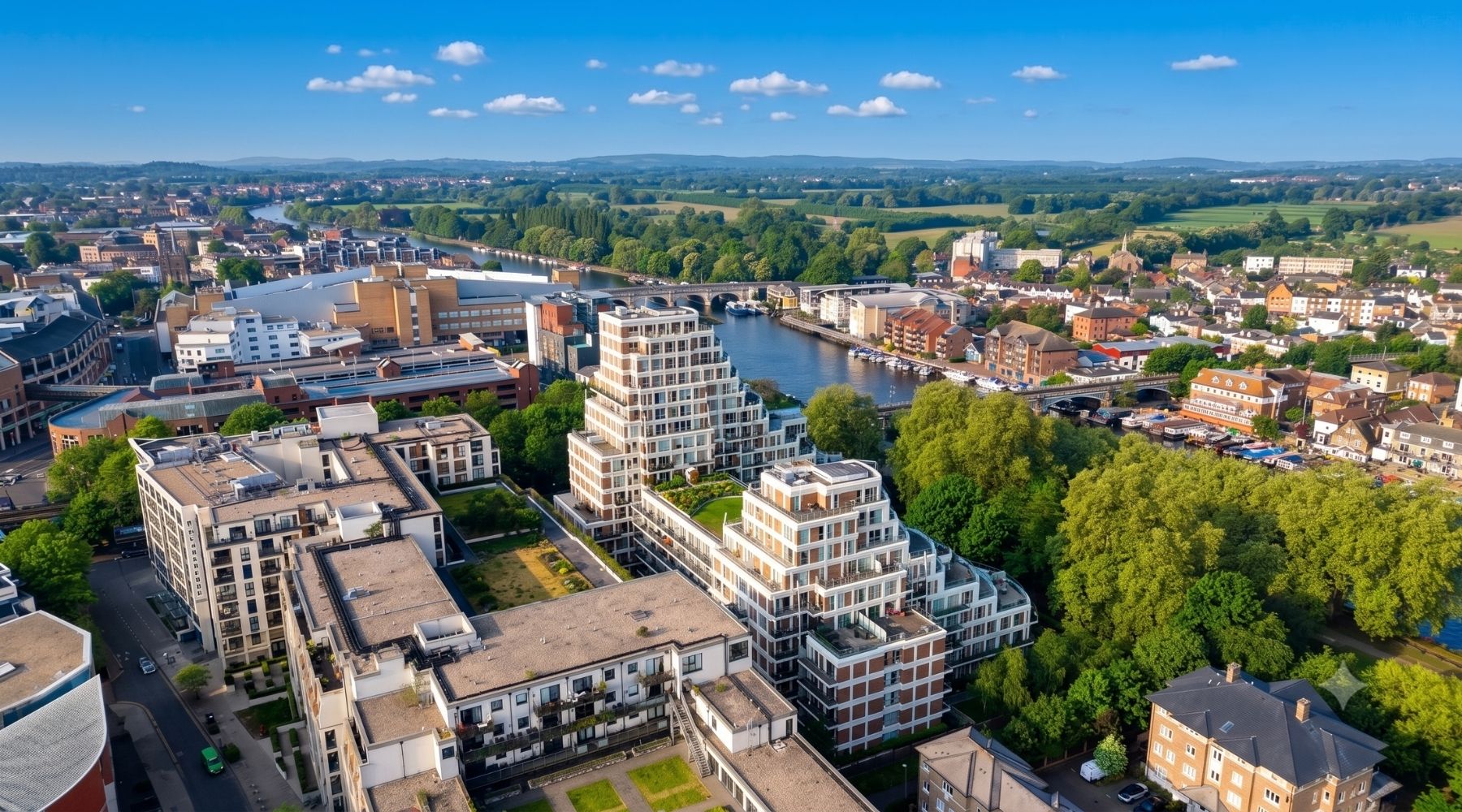
For everyone outside that group, the arithmetic has shifted. The useful question is no longer how close you sit to the centre of London, but how close you sit to where your people already live. For a large slice of the south-west London and Surrey workforce, that answer is Kingston. Two mainline stations put central London within about half an hour, so the city stays within reach for the days that need it, and nobody is cut off from it. Before you commit either way, it is worth checking live journey times for your team's actual routes on South Western Railway.
Bigger names have reached the same conclusion. Unilever opened its UK and Ireland headquarters in the town in 2026, which tells you something about where the regional talent pool now sits. You can read the wider business picture on the Royal Borough of Kingston site. Set against Richmond or Wimbledon, Kingston tends to offer comparable quality for better value, which is a large part of why the move keeps happening.
The point is not only that a base here is lighter on the visible costs, though it usually is. It is that it strips out most of the hidden ones. A shorter commute for the people who live nearby. On-site parking and secure cycle storage, so coming in is a choice rather than a slog, and you can see the standard that space is held to across the building. Room to grow from a co-working desk or serviced office up to a larger floor at a single address, instead of a disruptive second move across town. If that is the road you are weighing up, we wrote a companion guide on moving your office out of London that walks through how a phased move actually runs.
How to work out your own number
You cannot manage a cost you have not measured, so before your next lease review, do the sum properly. This is the back-of-envelope version we would run ourselves, and it takes an afternoon rather than a consultant.
- Add the obvious. Rent, rates, service charge, insurance and the fit-out spread over the term. This is your visible cost, and it is the easy part to gather.
- Price the commute. Take your team's average door-to-desk time, multiply by the days you ask them in, and be honest about what that time is worth to the business. It is the cost nobody bills you for.
- Count the empty seats. Are you paying for space that sits unused, or held back by a room you have already outgrown? Both are money, and both are easy to ignore.
- Put a figure on turnover. Ask how many recent leavers named the commute or the location on their way out. Rehiring and retraining are rarely cheap.
- Test the alternative. Run the same five lines for a base closer to where your team actually lives. The gap between the two is the real cost of a London office, stated plainly.
When teams sit down and do this, the rent line, the number they were comparing offices on, usually turns out to be the smallest part of the story. The commute and the churn are where the money quietly lives, and neither of them is printed on a single quote you will receive.

Common questions
The real cost of a London office is rarely the rent alone. Once you add business rates, service charge and fit-out to the hidden costs, the daily commute paid in hours, the staff who leave over the journey, and the space you have outgrown or never filled, the true figure is usually far higher than the invoice suggests.
The three that catch teams out most are commute time, staff attrition, and unused or outgrown space. None of them appears on a landlord's quote, and together they often outweigh the rent line that everyone negotiates hardest on.
For some businesses, yes. If your clients are in the City or the West End and you see them most weeks, or if most of your team lives in central or east London, a London base can earn its cost. For a team spread across south-west London and Surrey, it usually does not, and a base in Kingston upon Thames tends to remove most of the hidden costs while keeping the city within about half an hour.
Add the visible costs first: rent, rates, service charge, insurance and the fit-out spread over the term. Then price the commute, count any empty or outgrown desks, and put a figure on the staff turnover linked to your location. Run the same five lines for a base closer to where your team lives, and the gap between the two is your real cost.
Conclusion: the real cost of a London office
So what is the real cost of a London office? For some businesses it is a fair price for genuine proximity, and they should pay it without a second thought. For a growing team whose people are spread across the south-west and Surrey, it is usually far higher than the invoice suggests, and most of it is paid in hours and in the people who quietly decide the journey is no longer worth it. Add up the whole number rather than the rent alone, and the decision tends to make itself.
We are biased, of course, because we run one of the buildings on the other side of that sum. But the advice we would give a friend is the advice written here: measure the cost you cannot see before you renew the one you can. Where does your team actually need to be to do its best work, and what is your current address really costing you to keep them there?
Work out the real number, then come and look.
Whole floors and fitted suites with Andy, co-working and serviced offices with Kam. Same-day reply, Monday to Friday.